Michael J. Mauboussin
& Alfred Rappaport

Michael J. Mauboussin
Michael J. Mauboussin is Head of Consilient Research at Counterpoint Global, Morgan Stanley Investment Management. He has been an adjunct professor at Columbia Business School since 1993. He is the author of More Than You Know, Think Twice, and The Success Equation.

Alfred Rappaport
Alfred Rappaport is the Leonard Spacek Professor Emeritus at Northwestern University’s Kellogg School of Management. He is the author of Creating Shareholder Value and Saving Capitalism from Short-Termism. Rappaport has been a guest columnist for The Wall Street Journal, The New York Times, The Financial Times, Fortune, Business Week, Harvard Business Review, and Bloomberg Opinion.
More From Mauboussin
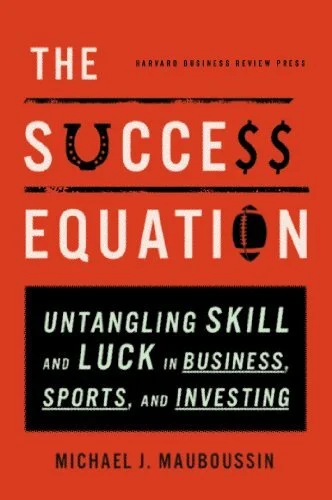
The Success Equation
Untangling Skill and Luck in Business, Sports, and Investing
What role, exactly, do skill and luck play in our successes and failures? Some games, like roulette and the lottery, are pure luck. Others, like chess, exist at the other end of the spectrum, relying almost wholly on players' skill. In his provocative book, Michael Mauboussin untangles the intricate strands of skill and luck, defines them, and provides useful frameworks for analyzing their relative contributions. He offers concrete suggestions for how to put these insights to work to your advantage in business and other dimensions of life.
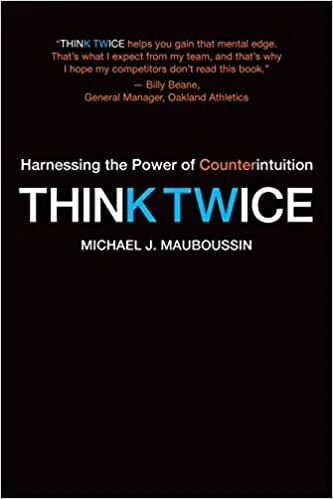
Think Twice
Harnessing the Power of Counterintuition
No one intentionally makes bad decisions. Yet we make them all the time. In fact, some of the worst disasters in recent history—the collapse of major investment banks, the global financial meltdown—were the result of seemingly reasonable decisions made by a lot of smart people. How does this happen? Through vivid stories from business, sports, science, and everyday life, Mauboussin categorizes common mental mistakes and offers actionable advice for avoiding them. Backed by powerful research and shrewd analysis, this book gives you a mental toolkit for spotting dangerous decision traps.
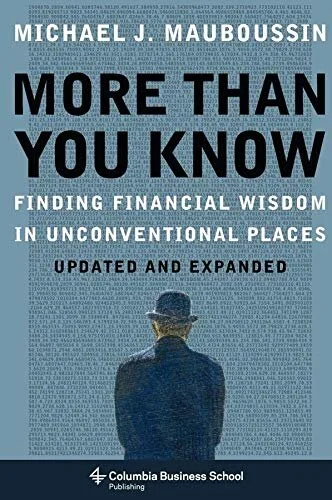
More Than You Know
Finding Financial Wisdom in Unconventional Places
Since its first publication, Michael J. Mauboussin's popular guide to investing has been translated into eight languages and has been named best business book by BusinessWeek and best economics book by Strategy+Business. Now updated to reflect current research and expanded to include new chapters on investment philosophy, psychology, strategy and science as they pertain to money management, this volume is more than ever the best chance to know more than the average investor.
More From Rappaport
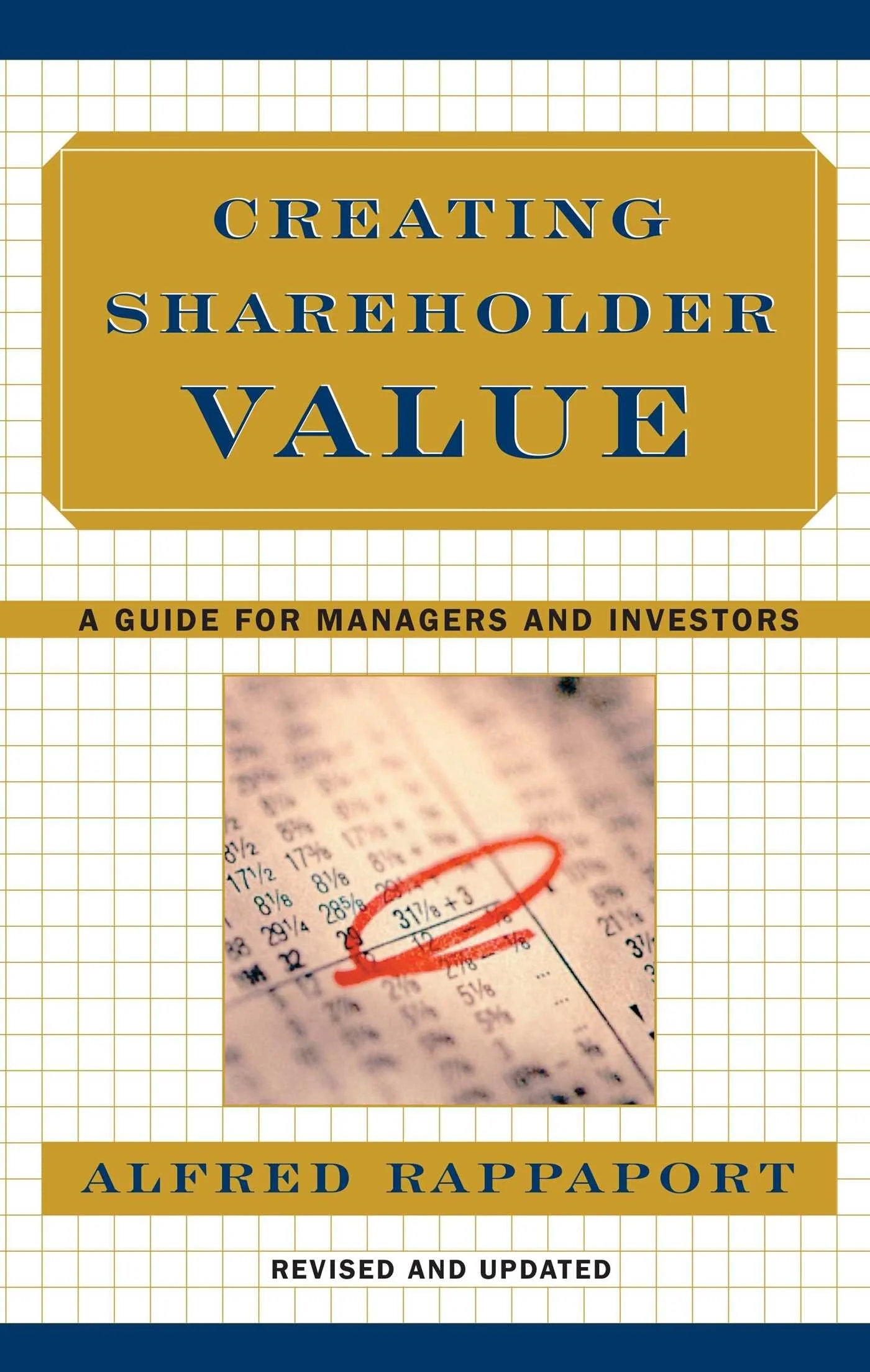
Creating Shareholder Value
A Guide for Managers and Investors
The ultimate test of corporate strategy, the only reliable measure, is whether it creates economic value for shareholders. After a decade of downsizings frequently blamed on shareholder value decision making, this book presents a new and in-depth assessment of the rationale for shareholder value. Further, Rappaport presents provocative new insights on shareholder value applications to: (1) business planning, (2) performance evaluation, (3) executive compensation, (4) mergers and acquisitions, (5) interpreting stock market signals, and (6) organizational implementation.
Readers will be particularly interested in Rappaport's answers to three management performance evaluation questions: (1) What is the most appropriate measure of performance? (2) What is the most appropriate target level of performance? and (3) How should rewards be linked to performance? The shareholder value approach presented here has been widely embraced by publicly traded as well as privately held companies worldwide. Brilliant and incisive, this is the one book that should be required reading for managers and investors who want to stay on the cutting edge of success in a highly competitive global economy.
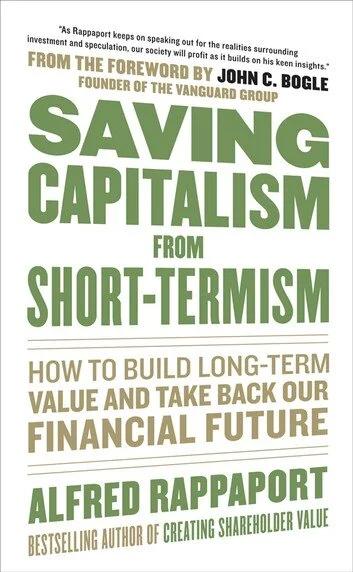
Saving Capitalism from Short-Termism
How to Build Long-Term Value and Take Back Our Financial Future
Business leaders today obsess over quarterly earnings and the current stock price—and for good reason. Corporate incentives typically focus on short-term profits rather than long-term value creation. Nothing is more harmful to businesses—and to the broader economy. Few business thinkers in recent decades have contributed more to this subject than Alfred Rappaport. As an author and educator, Rappaport is a pioneer in developing the principles of values-based management and is an acknowledged authority on how to make long-term shareholder value the essential driver of corporate strategy. His latest work, Saving Capitalism from Short-Termism, is a clarion call for conquering the addiction to short-term profit—and getting on the path to building long-term value.
Rappaport’s solution to short-termism is simple but profound: business leaders must align the interests of corporate and investment managers with those of their shareholders and beneficiaries. His plan includes gaining the commitment of senior management and the board to long-term value creation as their governing objective; incentives that reward CEOs, operating-unit managers, and front-line employees for delivering superior long-term value; a major overhaul of corporate financial reporting that provides more relevant and transparent information to investors and other financial statement users; performance fees that align the interests of investment managers and shareholders; and actively managed funds with concentrated holdings and long investment horizons that tilt the odds in favor of better long-term shareholder returns.
If corporate and investment leaders do not address the problem of short-termism, more financial crises may be in store—and they are likely to be more severe and broader than the meltdown in 2008. The trade-off is clear: we can continue to pursue short-term profit at the expense of economic vitality, individual financial security, and perhaps even the dominance of the free-market system itself. Or we can take the responsible path outlined in this book and generate innovation, quality, growth, and value over the long term.
Papers & Articles by the Authors
- Harry M. Kraemer Jr., Michael J. Mauboussin, Alfred Rappaport, “A CEO's Playbook for Creating Long-Term Value: Ten Essential Resource Allocation Practices,” Journal of Applied Corporate Finance, Vol. 32, No. 3, Summer 2020, 108–117.
- Michael J. Mauboussin and Alfred Rappaport, “Transparent Corporate Objectives—A Win-Win for Investors and the Companies They Invest In,” Journal of Applied Corporate Finance, Vol. 27, No. 2, Spring 2015, 28–33.
- Michael J. Mauboussin and Alfred Rappaport, “Reclaiming the Idea of Shareholder Value,” Harvard Business Review, July 1, 2016.
- Michael Mauboussin and Alfred Rappaport, “End Short-Term Financial Reporting Fudges,” Financial Times, May 30, 2012.
- Alfred Rappaport and Michael J. Mauboussin, “Valuation Matters,” Harvard Business Review, Vol. 80, No. 3, March 2002, 24.